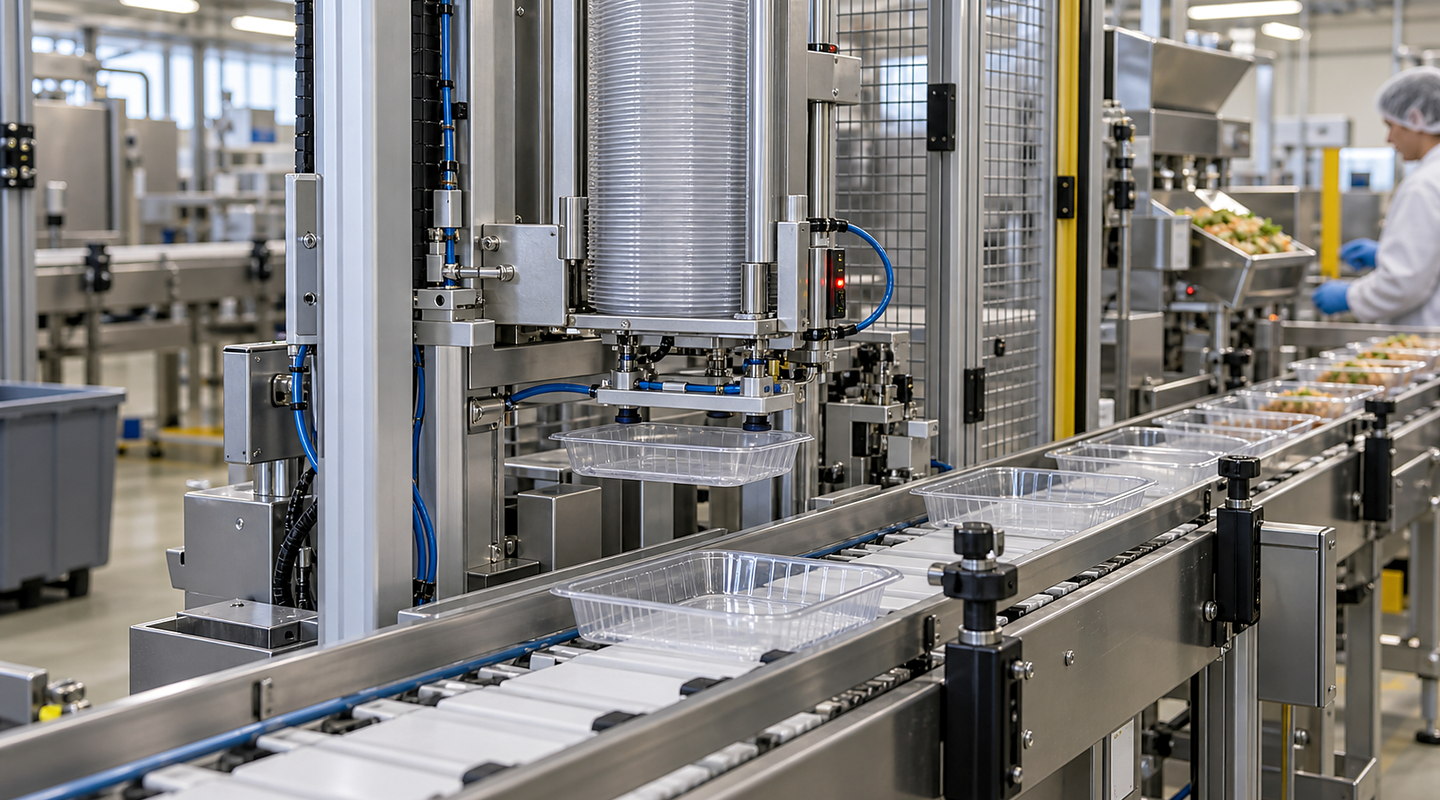
Record cup-lid denesting acceptance trials: representative batches, stack condition, double picks, damage, replenishment, delivery position and recovery.
In brief
Agree cup-lid denesting acceptance around the representative lid range and correctly presented delivery at the downstream station. Record separation, damage and double-pick observations, then challenge an empty stack, replenishment, jams and incorrectly presented lids. Retain the agreed detection, recovery and usable-delivery results.
Turn your production information into clearer decisions — Cup Lid Denesters
Plan cup lid denesters around real component variation, bulk condition, orientation, usable delivery rate and the downstream interface. Discuss representative part trials with Sorting Solutions. Use this guide to resolve jam, damage and recovery acceptance checks before it limits the final system.
Jam, Damage and Recovery Acceptance Checks: condition, range and effect on your process
Current condition
Record the normal supply batches, lid profile, surface finish, nesting and stack condition. Identify supplier variants, fragile or sticking lids and the orientation, position and usable supply required at the next sealing or placement operation.
Realistic range
Include normal, marginal and supplier-variant lids, sticking/damaged examples, double picks and incorrect presentation. Challenge empty-stack and replenishment conditions as well as jams, using the normal operator replenishment method.
Effect on the system
Judge correctly separated lids at the agreed downstream position and orientation, including interruptions and recovery. Retain detection/recovery observations, damage and acceptance checks, unresolved interface decisions and the basis for the usable-delivery result.
Before you contact us
Five questions about jam, damage and recovery acceptance checks for your application
Who can confirm this information?Identify the person responsible for jam, damage and recovery acceptance checks in production, quality, engineering or operations.
How representative is the sample?Include age, supplier, batch, environment and upstream process state where they affect cup lid denesters.
What is the difficult condition?Include the slow, reflective, flexible, dirty, damaged, marginal or uncommon case that your system must still handle.
How will you judge the result?Agree the method, repetitions, acceptable range, result record and the response if the observed result falls outside the agreed range.
What else must be coordinated?Your final cup lid denesters scope must also account for escapement and downstream pick interface, jam, damage and recovery acceptance checks, current regulations and the conditions at your site.
Connected details
Review jam, damage and recovery acceptance checks as part of the complete system
Question 1
Component Geometry and Variation for Cup-Lid Separation & Feeding
Keep representative lids from normal batches and supplier variants with the trial record. Describe profile and nesting differences and any marginal samples needed to bound the approved range.
Question 2
Surface, Fragility and Entanglement Behaviour
Record surface-finish differences, fragile lids, sticking and handling damage. Retain difficult examples and the separation/damage observations rather than judging only hand-selected lids.
Question 3
Bulk Condition and Replenishment Method
Record normal stack condition and operator replenishment. Include empty-stack and replenishment challenges with the agreed detection and recovery sequence.
Question 4
Required Orientation and Delivery Rate
State the orientation, position and usable rate required by the next operation. Assess accepted separated lids delivered to that point, including recovery from exceptions.
Question 5
Escapement and Downstream Pick Interface
Document the escapement and downstream pick interface at the sealing or placement station. Use representative lids to resolve the handover and retain outstanding interface actions.
Question 6
Jam, Damage and Recovery Acceptance Checks
Record double picks, jams, damaged lids and incorrect presentation. Agree detection, recovery and acceptance checks and retain their effect on usable downstream supply.