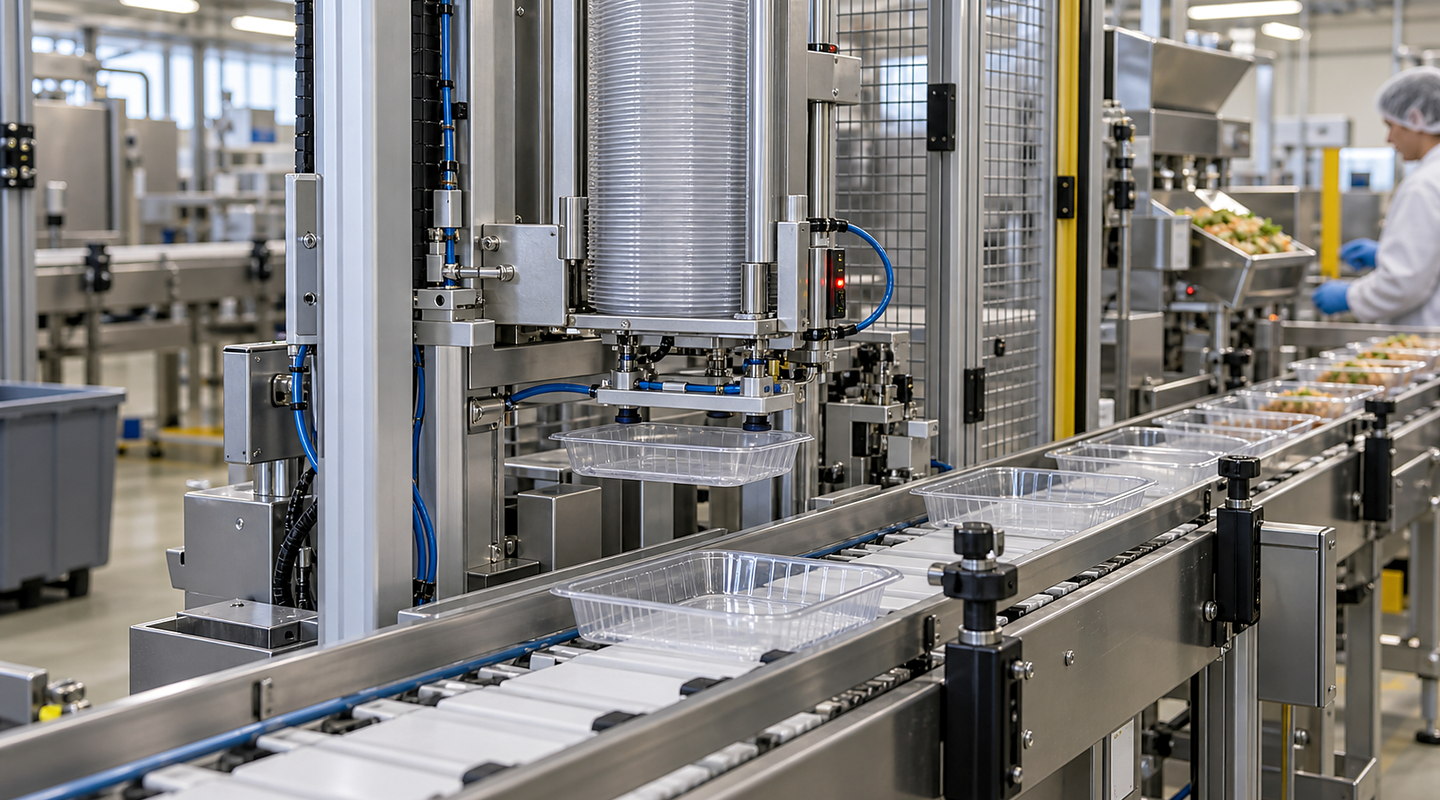
Cup Lid Denesters: How the Process Works
Plan cup-lid denesting trials with representative stacks, lid variation, double picks, replenishment, delivery orientation and downstream recovery checks.
Define cup-lid denesting by correctly separated lids presented to the next operation. Use stacks from normal supply batches, including profile, surface-finish, nesting and fragile-lid variations. Trial double picks, an empty stack, replenishment and incorrect presentation, then agree how detection and recovery affect usable delivery.
Use the lid and stack comparison guide and rate and recovery trial record. A nominal feeder cycle is not the same as usable supply at the sealing or placement station.
Understand the complete route from input to accepted output — Cup Lid Denesters
Plan cup lid denesters around real component variation, bulk condition, orientation, usable delivery rate and the downstream interface. Discuss representative part trials with Sorting Solutions. Follow the material or part through each operating step and include recovery, cleaning and change in the real cycle.
Discuss your application

Four clear stages for cup lid denesters
At each stage, you can review how component geometry and variation for cup-lid separation & feeding and jam, damage and recovery acceptance checks affect the next commitment.
- 01
Review Representative Production Components
Provide lids and stacks from normal supply batches, including supplier variants. Record profile, surface finish, nesting and stack condition, with examples that stick together or become damaged during handling.
- 02
Trial Separation, Orientation and Presentation
Trial separation and presentation with the representative lid range. Include double picks, damaged lids and incorrect presentation. Define what counts as an accepted separated lid rather than choosing a method from nominal feeder speed alone.
- 03
Develop Tooling, Controls and the Downstream Interface
Define the orientation, position and usable supply rate required at the sealing or placement station. Review the escapement and downstream pick interface using representative lids, and document the handover and unresolved interface decisions.
- 04
Challenge Delivery, Replenishment, Jams and Recovery
Challenge an empty stack, replenishment, jams and double picks. Agree the detection and recovery sequence for lids not correctly presented, then assess usable delivery at the downstream point including these interruptions.
Decisions and results stay connected
| Stage | What happens | What you can review |
|---|---|---|
| Review Representative Production Components | Provide lids and stacks from normal supply batches, including supplier variants. Record profile, surface finish, nesting and stack condition, with examples that stick together or become damaged during handling. | Lid variants, profile/surface/nesting observations, normal stack condition and difficult samples. |
| Trial Separation, Orientation and Presentation | Trial separation and presentation with the representative lid range. Include double picks, damaged lids and incorrect presentation. Define what counts as an accepted separated lid rather than choosing a method from nominal feeder speed alone. | Separation and damage observations, double-pick cases and the definition of accepted presentation. |
| Develop Tooling, Controls and the Downstream Interface | Define the orientation, position and usable supply rate required at the sealing or placement station. Review the escapement and downstream pick interface using representative lids, and document the handover and unresolved interface decisions. | Required lid orientation and position, downstream pick interface and usable-delivery requirement. |
| Challenge Delivery, Replenishment, Jams and Recovery | Challenge an empty stack, replenishment, jams and double picks. Agree the detection and recovery sequence for lids not correctly presented, then assess usable delivery at the downstream point including these interruptions. | Empty-stack/replenishment/jam tests, agreed detection and recovery sequence, usable delivery and outstanding actions. |
Keep connected responsibilities clear
Your final cup lid denesters scope must also account for escapement and downstream pick interface, jam, damage and recovery acceptance checks, current regulations and the conditions at your site.
- Sample trials must include normal, marginal and supplier-variant components.
- Quoted feeder output is not the same as usable delivery at the downstream process.
- Fragile, flexible, magnetic or entangling parts may need a different presentation method.